
A Christmas afternoon tea at home is one of the cosiest ways to spend a winter afternoon. Warm spiced scones fresh from the oven, jam first and a proper dollop of Cornish clotted cream on top. Finger sandwiches with golden Cornish butter spread right to the edges. A pot of tea that never seems to run dry, and nobody tutting when you go back for another scone. Below you’ll find everything you need to make it happen, from the menu and recipes to a make-ahead plan that keeps the big day calm.
Table of Contents
What Do You Serve at a Christmas Afternoon Tea?
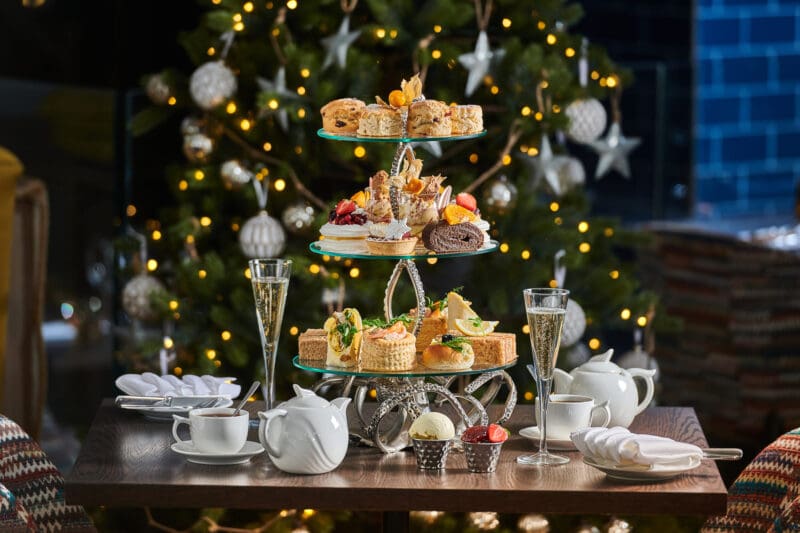
A Christmas afternoon tea follows the classic three tiers, each with a festive twist:
- Finger sandwiches, such as turkey and cranberry or smoked salmon
- Spiced scones with jam and Cornish clotted cream
- Mince pies, Christmas cake and small festive bakes
- A pot of tea (or hot chocolate for the kids)
The Three Tiers Explained
Think of it as a little culinary Christmassy journey from bottom to top.
- The bottom tier is for savouries. These are the sturdy bits that set you up for what’s coming. Finger sandwiches, a few mini sausage rolls, maybe some cheese straws.
- The middle tier is the scones, and in Cornwall that makes it the most important tier on the stand! Serve them warm, with a pot of jam and a good bowl of Cornish clotted cream so everyone can help themselves.
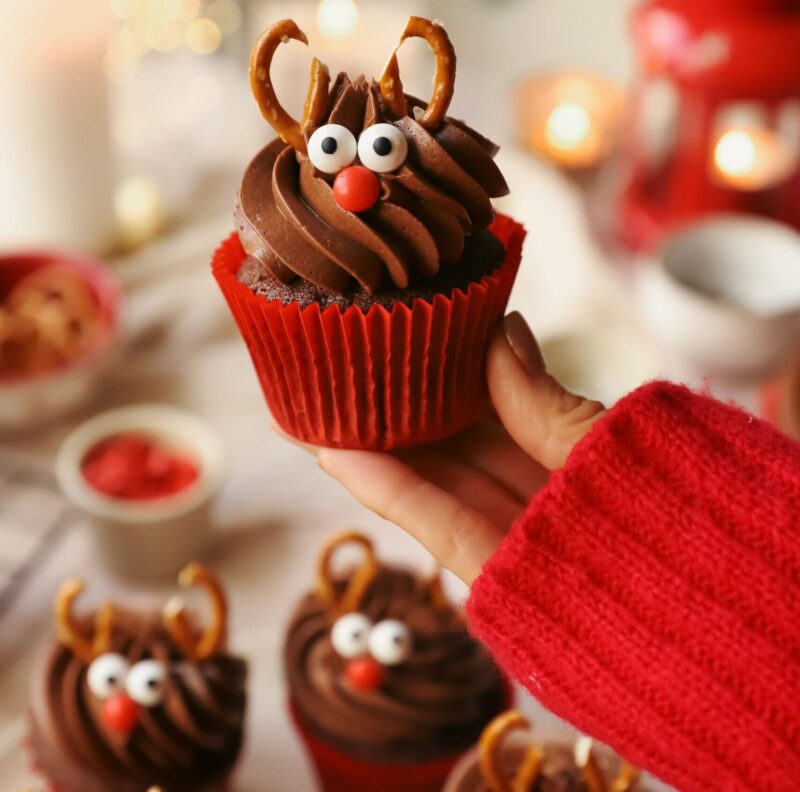
- The top tier is for sweet treats, ideally small enough to eat in two bites. Mince pie brownies, mini Christmas puddings, shortbread, Cornish fudge or anything festive you fancy baking. If your guests include little ones, you could also make some reindeer cupcakes for extra festive fun.
No cake stand? Don’t worry. A few nice plates in a row down the table work just as well.
Getting the Sweet and Savoury Balance Right
Christmas food is rich, so the trick is not to let every tier turn into a sugar and brandy fest. Aim for roughly half savoury and half sweet, and slip in something fresh or sharp to cut through it all. That could be cucumber sandwiches, a tangy cheddar with chutney, or a few clementine segments on the side.
If your scones are spiced, keep the jam simple. A good strawberry jam lets the spice and the clotted cream do the talking.
Christmas Day Afternoon Tea: When to Serve It and What to Make
What Time Should You Serve Afternoon Tea on Christmas Day?
Serve afternoon tea on Christmas Day at around 4 or 5pm, roughly three hours after Christmas lunch. That leaves time for a walk, the King’s Speech at 3 pm and a snooze on the sofa, so appetites have a chance to come back before the scones come out.
A Lighter Spread After the Big Lunch
Let’s be honest, nobody needs a full three tiers after turkey and all the trimmings. On Christmas Day, keep it small and cosy. A plate of mini scones with jam and clotted cream, a few turkey sandwiches and a tin of mince pies is plenty.
Put the kettle on and let people graze. A mug of Cornwall Gold hot chocolate goes down very nicely as the light starts to fade, too.
Christmas Eve and Boxing Day Versions (Making the Most of Leftovers)
On Christmas Eve, an afternoon tea makes a relaxed alternative to a big dinner while the kitchen is busy with prep for the next day. Bake your scones ahead, pull them from the freezer in the morning, and you’ll barely have to lift a finger.
Boxing Day is where a Christmas afternoon tea really earns its place. Leftover turkey, ham and cranberry sauce make brilliant finger sandwiches, especially spread with golden Cornish butter. Any odds and ends from the cheese board can go on the bottom tier, and if there’s clotted cream left in the fridge, we’ve got plenty of ideas for that too.
Just remember to cool leftovers quickly, cover them and get them into the fridge within a couple of hours. The Food Standards Agency’s Christmas advice has more on keeping festive food safe.
Your Christmas Afternoon Tea Menu (With Recipes)
Festive Finger Sandwiches
Good sandwiches start with good butter. Spread golden salted Cornish butter right to the edges of every slice. It tastes better, and it stops the fillings from making the bread soggy if you’re prepping ahead. Here are three festive fillings to try:
- Turkey and cranberry: thinly sliced turkey with a smear of cranberry sauce and a little crumbled stuffing if you have some.
- Smoked salmon: on buttered brown bread with a squeeze of lemon, plenty of black pepper and a few thin slices of cucumber.
- Cheddar and chutney: a strong cheddar (or a bit of Cornish Yarg) with a spoonful of your favourite Christmas chutney.
Cut off the crusts, slice into neat fingers, then cover with a clean, damp tea towel until it’s time to serve.
Spiced Mincemeat Scones
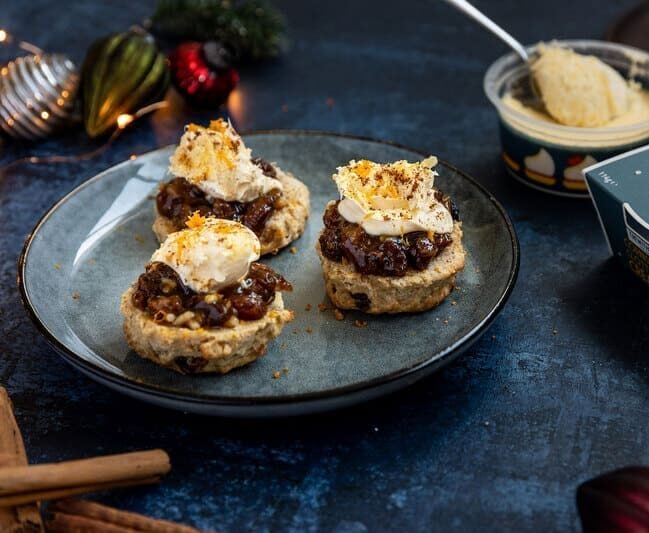
These are Christmas in scone form: warm, gently spiced, with little pockets of mincemeat and a hint of orange. They’re the star of the middle tier.
Makes: 8 scones | Prep: 15 mins | Cook: 12 to 15 mins
Ingredients
- 250g self-raising flour, plus extra for dusting
- 1 tsp baking powder
- 1½ tsp mixed spice
- A pinch of salt
- 60g cold Cornish unsalted butter, cubed
- 30g caster sugar
- Zest of 1 orange
- 100g mincemeat
- 1 medium egg
- 75ml Cornish whole milk, plus a splash extra if needed
Method
- Heat the oven to 220°C (200°C fan) and line a baking tray with baking paper.
- Mix the flour, baking powder, mixed spice and salt in a large bowl. Rub in the butter with your fingertips until it looks like breadcrumbs.
- Stir in the sugar and orange zest.
- Beat the egg with the milk and set aside 1 tbsp for glazing. Make a well in the flour, add the mincemeat and the rest of the egg mixture, then bring it together with a table knife into a soft dough. If it feels dry, add a splash more milk. Try not to overwork it.
- Tip onto a floured surface and pat it out to about 2.5cm thick. Cut out rounds with a 6cm cutter, pressing straight down without twisting so they rise nice and tall. Gently re-shape the scraps once to cut the rest.
- Brush the tops with the saved egg and bake for 12 to 15 minutes, until risen and golden.
- Cool on a wire rack wrapped in a clean tea towel to keep the tops soft.
To serve: split while still warm, then go jam first with a generous dollop of Cornish clotted cream on top. That’s the Cornish way.
Make ahead: freeze the baked, cooled scones in a bag for up to a month. Defrost at room temperature, then warm through in the oven for 5 minutes before serving.
Orange and Spice Clotted Cream (A 2-Minute Upgrade)
Want to make your cream tea feel even more festive? Spoon a tub of Cornish clotted cream into a bowl and gently fold in the zest of half an orange and a good pinch of mixed spice. Go easy with the folding, because a few gentle turns are all it needs. Pop it back in the fridge until you’re ready to serve, then finish with a little extra zest on top. It’s lovely with the mincemeat scones and just as good on a warm mince pie.
Homemade Brandy Butter
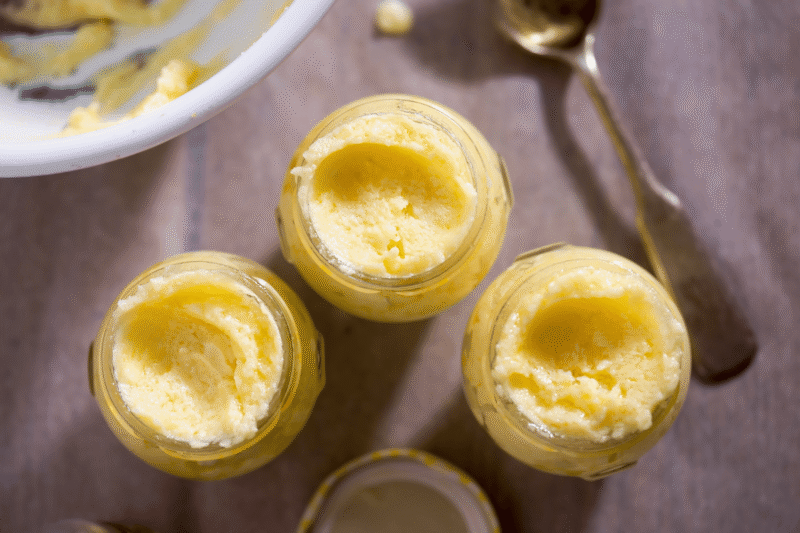
No Christmas spread is complete without a dish of brandy butter on the table. It takes just a few minutes with Cornish butter and is gorgeous melting into a warm mince pie or a slice of Christmas cake. Our brandy butter recipe has everything you need.
Top Tier Bakes: Mince Pies, Clotted Cream Shortbread and Christmas Cake
The top tier is where you can have a bit of fun, and it doesn’t all have to be homemade.
Mince pies: shop-bought or homemade, they’re always welcome. Warm them through for a few minutes before serving and pop a spoonful of clotted cream or brandy butter on top.
Clotted cream shortbread: clotted cream makes shortbread wonderfully rich and crumbly. Beat 100g unsalted butter, 50g clotted cream and 50g caster sugar until smooth, then mix in 200g plain flour until it comes together. Roll out to about 1cm thick, cut into fingers or stars, and bake at 160°C (140°C fan) for 20 to 25 minutes until just pale golden. Dust with caster sugar while still warm.
Christmas cake: cut it into small squares or thin fingers so it fits on the stand. A little goes a long way after all those scones. If you fancy a showstopper with a difference, our cranachan cake goes down a treat too.

Festive Drinks: Tea Pairings and Cornwall Gold Hot Chocolate
A proper pot of tea is a must. With all that rich, spiced food, a strong English Breakfast or Assam cuts through beautifully. An Earl Grey goes nicely with anything orangey, and a spiced chai feels very Christmassy. Serve it with a jug of creamy Cornwall Gold milk, and don’t forget to warm the pot first.
Jam or Cream First? The Cornish Way
Ask anyone in Cornwall and you’ll get the same answer: jam first, every time.
Split your warm scone, spread on a layer of jam, then crown it with a generous dollop of Cornish clotted cream. The jam sinks into the warm scone, and the cream sits proudly on top where it belongs.
Over the Tamar in Devon, they do it the other way round, and the friendly rivalry has been going for generations. We like to think the rest of the country is on our side, though. A national survey found 71 per cent of people go jam first, the traditional Cornish method, with just 29 per cent backing Devon’s cream-first approach (you can read more about it here). It’s said to be jam first at Buckingham Palace garden parties, too.
Whichever way you go, the cream matters most. Real Cornish clotted cream can only be made in Cornwall, from Cornish milk, and it’s protected by its own official PDO status. That thick golden crust doesn’t happen by accident. It comes from milk from our Cornish herds grazing on lush pastures.

How Much Food Do You Need for an Afternoon Tea? A Per-Person Guide
Over-catering is practically a Christmas tradition, but this rough guide will help you get it about right.
| Item | Per guest | 4 guests | 8 guests | 12 guests |
| Finger sandwiches | 4 fingers | 16 | 32 | 48 |
| Scones | 1 to 2 | 4 to 8 | 8 to 16 | 12 to 24 |
| Clotted cream | About 30g (2 heaped tbsp) | 120g | 240g | 360g |
| Jam | About 2 tbsp | 8 tbsp | 16 tbsp | 24 tbsp |
| Sweet bites | 3 | 12 | 24 | 36 |
| Tea | 2 to 3 cups | 1 large pot, topped up | 2 pots | 3 pots |
So, how many scones do you need? Allow one per person for a full afternoon tea, or two if the scones are the main event.
If you’re serving afternoon tea on Christmas Day after a big lunch, you can roughly halve the sandwiches and sweet bites. Keep the scone count the same, though. There’s always room for a scone.
Your Christmas Afternoon Tea Countdown (Make-Ahead Plan)
Two Weeks Before: What to Bake and Freeze
- Bake and freeze your scones. Cool them completely, then freeze in a bag for up to a month.
- Make your mince pies and freeze them, baked or unbaked, so they’re ready to warm through on the day.
- Make the brandy butter and keep it in the fridge or freezer.
- Stock up on butter. It freezes really well, so it’s worth getting ahead before the shops get busy. Our guide on how to freeze butter explains how.
- Count your guests and check you’ve got enough teacups, plates and a cake stand (or a few nice serving plates).
The Day Before
- Pick up your clotted cream, and check the date on the tub.
- Bake the clotted cream shortbread and store it in an airtight tin.
- Make the orange and spice clotted cream, then cover it and pop it in the fridge.
- Prep your sandwich fillings and keep them covered in the fridge.
- Cut the Christmas cake into small squares or fingers and lay the table, so the day itself is all about the fun bits.
On the Day: Your 2-Hour Timeline
2 hours to go: take the scones out of the freezer to defrost at room temperature.
1½ hours to go: butter the bread right to the edges, make the sandwiches and cut them into fingers. Cover with a damp tea towel and chill.
1 hour to go: spoon the jam into little dishes and arrange the sweet bites on the top tier.
30 minutes to go: heat the oven to 180°C (160°C fan).
15 minutes to go: warm the scones and mince pies in the oven for about 5 minutes, and take the clotted cream out of the fridge so it softens slightly. Put the kettle on and warm the teapot.
Serving time: fill the stand from the bottom up, pour the tea and enjoy it. You’ve earned it.
Your Christmas Afternoon Tea Shopping List
From the dairy aisle:
- Cornish Clotted Cream
- Golden Salted Cornish Butter, for sandwiches
- Golden Unsalted Cornish Butter, for baking and brandy butter
- Cornish Whole Milk, for scones
- Cornwall Gold Milk, for tea and hot chocolate
The rest:
- Self-raising flour, plain flour, caster sugar and mixed spice
- Mincemeat, strawberry jam and oranges
- Sliced bread (white and brown)
- Turkey, smoked salmon, cheddar, cranberry sauce and chutney (no need to buy turkey if using leftovers!)
- Mince pies and Christmas cake, if you’re not making your own
- Tea, hot chocolate and brandy
Find Cornish Clotted Cream near you
Setting a Festive Table (Without the Fuss)
You don’t need matching china or a florist. Start with a tablecloth, then add a few sprigs of holly or pine, some clementines in a bowl and a string of fairy lights or a couple of candles. Mismatched teacups look charming, and a cake stand is lovely but not essential. Just keep the clotted cream within easy reach.
Dietary Swaps: Vegetarian and Gluten-Free Options
Vegetarian: check your mincemeat, as some contain beef suet, and look for a vegetarian version instead. For the sandwiches, egg and cress or cheddar and chutney are always popular. Just check that the cheese is suitable for vegetarians.
Gluten-free: a gluten-free self-raising flour blend works well in the scones, though you may need a splash more milk to bring the dough together. Use gluten-free bread for the sandwiches, and check the labels on your mincemeat and mince pies.
Christmas Afternoon Tea at Home vs a Hotel: Is It Worth It?
Both are a proper treat, just in different ways. Heading out means someone else does the baking and the washing up, which makes it perfect for a special occasion or a catch-up with friends in December. You might even spot our clotted cream on the stand at some of Cornwall’s best hotels and tea rooms.
A Christmas afternoon tea at home is all about being cosy and relaxed. There’s no booking and no dress code, and it costs far less per person. You can make it your own, invite the kids and grandparents, and linger as long as you like. On Christmas Day itself, home wins hands down.

Christmas Afternoon Tea FAQs
What’s the Difference Between Afternoon Tea and High Tea?
Afternoon tea is a light, elegant affair of sandwiches, scones and cakes, served mid-afternoon. High tea was traditionally a heartier early evening meal for working families, with hot savoury dishes like pies, meats and bread. Today the two names often get mixed up, but a Christmas afternoon tea is the lighter, sweeter one.
Can You Make Scones Ahead and Freeze Them?
Yes, and it’s one of the best ways to take the pressure off. Bake your scones, let them cool completely, then freeze them in a bag for up to a month. Defrost at room temperature for a couple of hours, then warm them in the oven for about 5 minutes so they taste freshly baked.
How Should You Serve Clotted Cream?
The Cornish way is to break the warm scone with your hands, spread each half with jam, then add a generous dollop of Cornish clotted cream on top. The jam stops the warm scone from melting the cream. Serve it straight from the fridge, or take it out about 15 minutes beforehand so it’s easier to spoon.
Can You Freeze Clotted Cream?
We’d recommend not freezing it. Clotted cream is best enjoyed fresh, and freezing changes its texture, leaving it dry and crumbly once thawed. Once opened, keep it in the fridge and enjoy it within three days. Our blog on whether you can freeze clotted cream has more detail, and our leftover clotted cream ideas will help you use up every last spoonful.
What Tea Goes Best With a Christmas Afternoon Tea?
A strong English Breakfast or Assam cuts through rich, spiced food beautifully. Earl Grey pairs nicely with anything orangey, and a spiced chai feels wonderfully festive. Whichever you choose, serve it with a jug of creamy Cornwall Gold milk.
How Far Ahead Can You Make Finger Sandwiches?
You can make them up to a couple of hours before serving. Butter the bread right to the edges to stop it going soggy, then cover the sandwiches with a clean, damp tea towel and keep them in the fridge. You can prep the fillings the day before to save time.